Cheapest Plane Secrets: Save Big on Your Dream Aircraft
Published September 5, 2026
Owning an airplane may seem like a luxury reserved for wealthy business owners and experienced aviators. But the reality is that there are affordable aircraft options for buyers who know where to look, what questions to ask, and how to evaluate the true cost of ownership.
The cheapest plane is not necessarily the aircraft with the lowest asking price. A bargain aircraft can become expensive quickly if it needs major engine work, outdated avionics, extensive maintenance, or hard-to-find parts. On the other hand, a carefully selected used airplane can provide years of enjoyable flying without the price tag many first-time buyers expect.
Whether you’re a new pilot, weekend flyer, aircraft enthusiast, or experienced owner looking for a budget-friendly upgrade, understanding the market can help you make a smarter purchase.
What Makes a Plane Truly Affordable?
When searching for the cheapest airplane to buy, it’s easy to focus on the number in the listing. However, the purchase price is only one part of the financial equation.
A lower-priced aircraft may have an excellent maintenance history and readily available parts, while another airplane at a similar price could require thousands of dollars in repairs shortly after purchase.
Before buying, consider:
- Overall airframe condition
- Engine hours and maintenance history
- Propeller condition and remaining service life
- Aircraft logbooks and documentation
- Annual inspection history
- Availability and cost of replacement parts
- Avionics condition
- Insurance and storage costs
- Fuel consumption
- Expected resale value
The goal isn’t simply to find a cheap plane. It’s to find an affordable aircraft that makes financial sense to own and operate.
Does a Cheap Plane Mean an Unsafe Plane?
Not necessarily.
Aircraft age and purchase price alone don’t determine whether an airplane is suitable for flight. Maintenance, airworthiness, operating history, inspections, and documentation are much more important factors.
The FAA maintains aircraft records containing information related to registration, recorded interests, and airworthiness, making aircraft records an important part of the research process for prospective buyers.
That means a decades-old airplane with thorough maintenance records may be a more attractive purchase than a newer aircraft with questionable documentation or neglected maintenance.
Before committing to a used aircraft, have qualified aviation professionals evaluate the airplane rather than relying solely on photographs, seller claims, or a test flight.
The Real Cost of Buying the Cheapest Airplane
The purchase price is only the beginning of aircraft ownership.
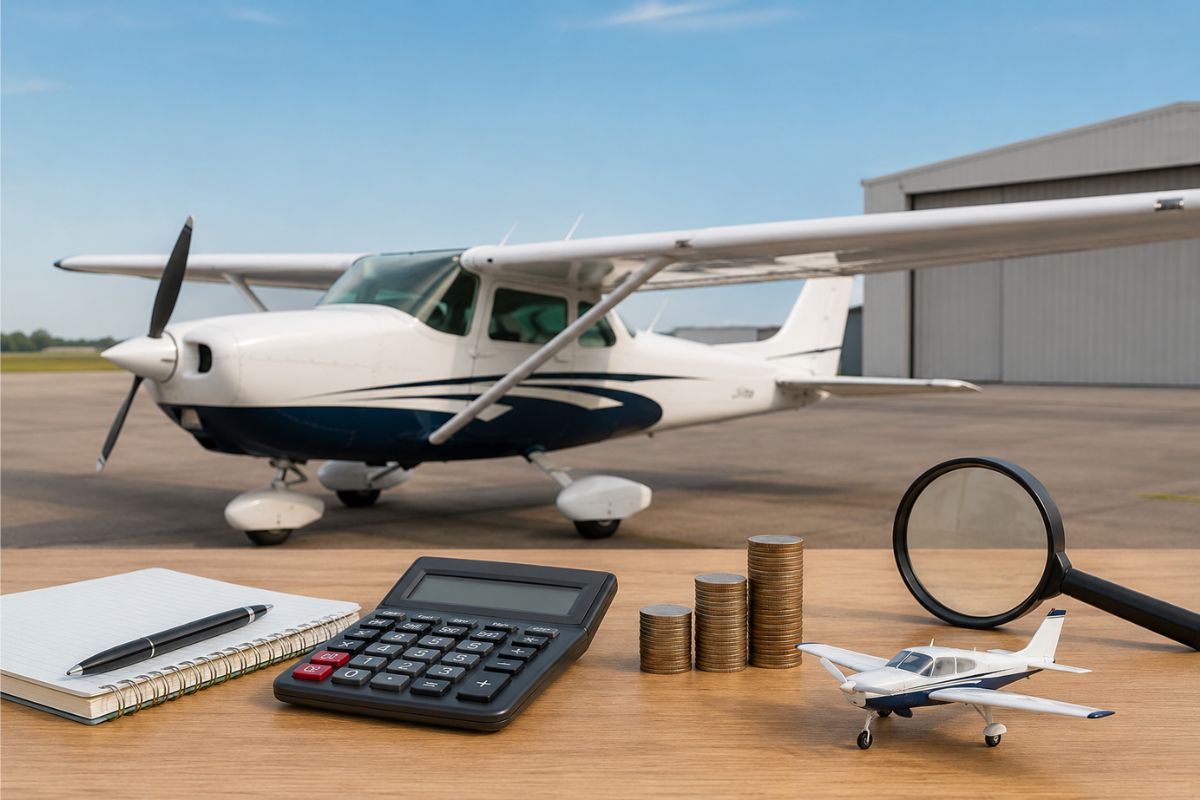
Depending on the aircraft, owners may need to budget for annual inspections, routine maintenance, hangar or tie-down fees, insurance, fuel, engine reserves, unexpected repairs, and avionics work.
This is why the cheapest plane on the market isn’t always the least expensive airplane to own.
For example, an aircraft that needs an immediate engine overhaul or extensive panel work could quickly erase the savings from a low purchase price. A slightly more expensive airplane with strong maintenance records may ultimately provide better value.
Look Beyond the Listing Price
When comparing aircraft, estimate:
Purchase price + immediate repairs + annual maintenance + operating costs + upgrades = realistic ownership cost
Thinking this way can prevent an attractive bargain from turning into an expensive project.
Used Aircraft Can Offer Excellent Value
For buyers searching for an affordable aircraft, the used market can provide considerably more choice than shopping exclusively for new airplanes.
Older trainers, two-seat aircraft, and established general aviation models can be particularly appealing because they often have extensive operating histories and established maintenance networks.
However, age should never be the only deciding factor.
Look for an airplane with:
- Complete and organized logbooks
- Consistent maintenance
- A documented inspection history
- A healthy engine and airframe
- Parts that are reasonably available
- Avionics appropriate for your intended flying
- A strong support network
- A configuration that fits your mission
A good used aircraft should be evaluated based on its condition and history, not simply its year of manufacture.
Vintage Aircraft vs. Newer Trainers
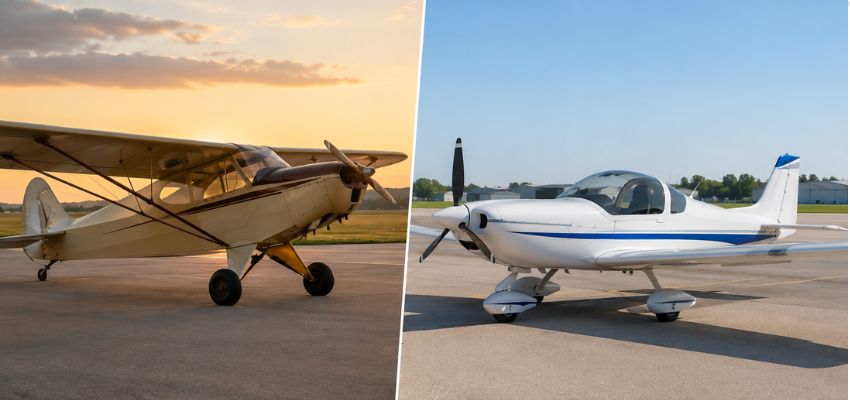
One of the biggest decisions for budget-conscious buyers is whether to purchase an older classic aircraft or spend more on a newer trainer.
Vintage airplanes can offer straightforward systems, established designs, and plenty of character. Some also benefit from strong owner communities and decades of maintenance experience.
Newer trainers, meanwhile, may provide improved ergonomics, updated equipment, modern avionics, and features that can make training or cross-country flying more convenient.
The better choice depends on what you plan to do with the aircraft.
For Training
A simple, predictable aircraft can be an excellent learning platform. Lower operating costs may also make a difference when you’re paying for flight instruction and building hours.
For Weekend Flying
An economical two-seat aircraft may provide everything you need for local sightseeing, short trips, photography, or recreational flying.
For Cross-Country Travel
A slightly larger aircraft with better range, useful payload, and dependable avionics may be worth the additional investment.
Your mission should determine your airplane, not the other way around.
Cheap Planes With Strong Resale Potential
Aircraft ownership doesn’t have to end when you’re ready to sell.
Some affordable aircraft remain attractive in the used market because pilots know the models, parts are available, and maintenance facilities are familiar with them.
When considering a cheap plane, ask yourself:
“Will another pilot want this aircraft when I’m ready to sell?”
Models with established pilot communities and accessible maintenance support can be easier to market later. A well-maintained aircraft with complete records can also be more appealing to future buyers.
Resale value should therefore be part of your buying strategy from the beginning.
What Can an Affordable Aircraft Actually Do?
Budget aircraft aren’t automatically limited to short flights around the airport.
Depending on the model and configuration, an affordable airplane may be capable of recreational cross-country trips, grass-strip operations, photography flights, sightseeing, flight training, and weekend adventures.
The important question is whether the airplane meets your mission requirements.
A pilot who primarily flies locally may have little reason to pay for advanced speed, complex systems, or expensive equipment. Another owner who regularly flies longer distances may benefit from investing more in range, navigation equipment, comfort, and avionics.
The smartest aircraft purchase is one that provides the capabilities you actually use.
Affordable Aircraft for New Pilots
Choosing an airplane as a new pilot can be overwhelming. There are countless models, configurations, engines, avionics packages, and maintenance considerations to compare.
For many new pilots, simplicity is valuable.
A straightforward aircraft can help you concentrate on developing fundamental flying skills instead of becoming dependent on complex equipment. At the same time, the airplane still needs to be properly maintained and suitable for the training environment.
If you’re buying your first aircraft, consider working with your flight instructor, mechanic, and aviation professionals before making a decision.
A low purchase price isn’t much of a bargain if the airplane doesn’t fit your training needs.
Two-Seat Planes: More Fun for Less
If your goal is recreational flying, a two-seat aircraft can offer an appealing combination of affordability and capability.
You may have enough room for yourself, a passenger, and some equipment without paying for the size and operating costs of a larger aircraft.
Two-seat aircraft can be suitable for activities such as:
- Weekend sightseeing
- Short trips
- Photography flights
- Airport-hopping
- Recreational flying
- Flight training
- Exploring smaller airports
For pilots who don’t need a large cabin or heavy payload, a smaller airplane can provide an enjoyable way to experience aircraft ownership while keeping operating expenses more manageable.
Budget Aircraft for Pilots Who Want Performance
Affordable doesn’t always mean slow or boring.
Some lower-cost aircraft offer responsive handling and enjoyable performance while maintaining relatively reasonable operating requirements. These airplanes can appeal to pilots who want recreational flying to be as much about the experience as the destination.
However, performance should always be matched to the pilot’s experience and qualifications.
An aircraft with more responsive handling or higher performance may require greater pilot proficiency than a basic trainer. Choosing an airplane because it looks exciting isn’t enough, you need to understand whether it fits your capabilities and intended use.
Classic Aircraft That Still Deliver Value
Some aircraft have remained popular for generations because of their recognizable designs, straightforward systems, and dedicated owner communities.
For the right buyer, an older classic can be an affordable entry point into aircraft ownership.
But classic aircraft require careful evaluation. Parts availability, previous repairs, corrosion, engine condition, modifications, and maintenance history can all have a significant impact on ownership costs.
The charm of an older aircraft should never replace a thorough inspection.
A beautiful airplane with an incomplete maintenance history can be far more expensive than a less glamorous aircraft that has been properly cared for.
When Paying More Up Front Actually Saves Money
Sometimes, increasing your purchase budget is the smarter financial decision.
Spending more on an aircraft with better records, stronger maintenance history, dependable equipment, and fewer immediate repairs may reduce your expenses after the sale.
This is particularly important when evaluating:
- Engine condition
- Propeller condition
- Landing gear
- Electrical systems
- Navigation equipment
- Communication radios
- Transponders
- Autopilots
- Instrument panels
- Structural condition
An aircraft that needs several major upgrades may cost considerably more than expected after purchase.
The objective isn’t to spend as little as possible. It’s to maximize value while minimizing unpleasant surprises.
Don’t Forget the Avionics
Avionics can significantly influence the value and usability of an aircraft.
Older radios, transponders, navigation systems, audio panels, and instrument panels may eventually require repair, replacement, or modernization. For some owners, upgrading avionics can make an older aircraft substantially more practical.
The FAA also maintains information on aircraft safety data, maintenance-related resources, repair stations, and other aviation records that can help owners and buyers conduct their research.
For aircraft owners in Palm Beach and West Palm Beach, professional avionics support can be an important part of keeping an older or budget-friendly aircraft dependable and current.
Palm Beach Avionics provides avionics repair, troubleshooting, aircraft electronics upgrades, custom installations, instrument panel fabrication, and aircraft maintenance. Its West Palm Beach facility serves pilots throughout Palm Beach, the Treasure Coast, surrounding areas, and nationwide.
Buying a Cheap Plane? Start With the Records
Before purchasing an aircraft, investigate its history.
Aircraft records can reveal important information about ownership, airworthiness, liens, and other recorded interests. The FAA specifically notes that its aircraft records can be researched by prospective buyers and used to investigate aircraft history and recorded liens.
Review the aircraft’s:
- Maintenance records
- Annual inspections
- Major repairs
- Engine changes
- Propeller history
- Avionics installations
- Modifications
- Damage history
- Ownership records
- Registration information
- Recorded liens
A proper pre-purchase inspection should also be performed by a qualified aviation professional who is independent of the seller whenever possible.
The FAA’s aircraft-buying guidance emphasizes the importance of reviewing required aircraft documentation and completing a final pre-purchase inspection before taking delivery.
How to Find the Cheapest Plane Without Buying a Problem
A smart aircraft search starts with a realistic budget.
Instead of asking only, “What is the cheapest airplane I can buy?”, ask:
“What is the most reliable aircraft I can afford to own?”
That change in perspective can help you avoid many common purchasing mistakes.
Build Your Budget
Set aside money not only for the aircraft but also for inspections, insurance, storage, maintenance, fuel, and potential repairs.
Research the Aircraft
Learn about common problems, parts availability, operating costs, and resale demand for the models you’re considering.
Review the Records
Don’t purchase an aircraft simply because it looks good. Documentation matters.
Arrange an Independent Inspection
Have a qualified mechanic evaluate the aircraft before finalizing the purchase.
Plan for Avionics and Maintenance
Determine whether the aircraft’s current systems meet your needs or whether upgrades will be necessary.
Think About the Future
Consider how long you expect to own the airplane and how easy it may be to maintain and resell later.
Frequently Asked Questions About the Cheapest Plane
What is the cheapest plane to buy?
The cheapest airplane to buy is typically found in the used general aviation market, particularly among smaller and older aircraft. However, prices vary considerably based on model, condition, maintenance history, engine hours, equipment, location, and market demand.
The lowest asking price should not automatically be considered the best deal.
Are cheap airplanes safe?
An inexpensive aircraft can be safe when it is properly maintained, airworthy, appropriately operated, and supported by complete records. Purchase price alone does not determine an aircraft’s safety.
Always have the aircraft evaluated by qualified aviation professionals before buying.
What should I check before buying a used aircraft?
Review the aircraft’s maintenance and ownership records, inspect the airframe and engine, verify the condition of the avionics, investigate damage or modification history, and check for recorded liens or other issues.
The FAA maintains aircraft records that can be researched by prospective buyers.
Is an older airplane cheaper to own?
Not always. Older aircraft may have lower purchase prices, but maintenance requirements, parts availability, engine condition, corrosion, and outdated avionics can increase ownership costs.
The best value depends on the individual aircraft’s condition and history.
Can avionics upgrades increase an aircraft’s value?
A well-planned avionics upgrade can improve an aircraft’s functionality and appeal, particularly when replacing outdated communication, navigation, transponder, or cockpit systems. However, the cost and potential resale benefit should be evaluated before investing.
Where can Palm Beach aircraft owners get avionics service?
Aircraft owners in Palm Beach and West Palm Beach can turn to Palm Beach Avionics for avionics repair, troubleshooting, installations, aircraft electronics upgrades, instrument panel work, and maintenance support. The company operates an FAA-approved facility in West Palm Beach and has NCATT-certified technicians.
Final Thoughts: Finding the Right Affordable Aircraft
Finding the cheapest plane isn’t simply about locating the lowest number on an aircraft listing.
The best bargain is an aircraft that fits your mission, has a sound maintenance history, offers manageable operating costs, and won’t immediately require expensive repairs or upgrades.
Take your time. Research the aircraft. Review the records. Get a professional pre-purchase inspection. And don’t overlook the condition of the avionics and other systems that can significantly affect ownership costs.
For aircraft owners in Palm Beach and the surrounding South Florida aviation community, dependable maintenance and avionics support can also make a major difference over the life of an aircraft.
With careful planning and the right aviation professionals, owning an aircraft can be much more achievable than you might think, and your dream of flying doesn’t have to remain on the ground.
40+ Years Serving South Florida in Avionics and Aircraft Maintenance
Palm Beach Avionics has been dedicated to providing top-notch avionics and aircraft maintenance services in South Florida for over four decades. Our team of highly skilled professionals takes pride in delivering exceptional quality workmanship, ensuring the safety and reliability of every aircraft we service.

Fact Checked For Accuracy
Our team has fact-checked this article for accuracy. Read about the editorial standards we employ on our website to ensure your safety and wellbeing.

About The Author
Rei Bayucca is a private jet enthusiast and professional writer. With many years of experience, she crafts articles that educate and inform her readers.