Gyroscopic Precession in Aviation: Aircraft Control Impact
Published May 14, 2026
Ever raised a tailwheel tail and veered sharply left? It is a jarring fight to maintain the runway centerline. This sudden pull highlights a hidden aerodynamic force. What is gyroscopic precession doing to your flight?
Understanding aviation gyroscopic precession ensures safe, precise control. When force strikes a spinning propeller, physics takes over. The action reacts ninety degrees ahead in rotation. This deflects your nose during critical takeoff rolls.
Crucially, gyroscopic precession aviation instruments also rely on this rule. Discover what gyroscopic precession is in aviation now. Step hard on the right rudder. Conquer this severe left-turning tendency completely right now.
The Physics of the Propeller Disk
Every spinning aircraft propeller is actually a powerful gyroscope. That means it obeys strict, unyielding laws of physics, rigidity in space and precession. As a pilot, you are not just flying a machine; you are wrestling with a high-speed spinning disc.
When you try to change its plane of rotation, it fights back. This constant aerodynamic battle requires your full attention during every single takeoff roll.
Force Multiplied Ninety Degrees Ahead
What happens when a force tilts this spinning propeller? The universe delivers a bizarre twist. The physical result of any applied force is not felt at the point of impact. Instead, the action shifts exactly 90 degrees ahead in the direction of rotation.
This delayed reaction is what forces your nose off target. Predicting this lag is the secret to making perfectly smooth control corrections.
The Sudden Tailwheel Takeoff Pitch
Tailwheel pilots know the exact moment the runway starts to vanish. As you push the yoke forward to raise the tail, you apply a force to the top of the propeller arc. Because the blades spin clockwise, that force manifests 90 degrees later on the right side.
The result? A sudden, violent left yaw. If you do not catch this movement instantly, the plane can quickly ground loop.
Why Nosewheel Aircraft Still Feel the Pull
Do tricycle-gear pilots get a free pass? Absolutely not. During rotation, as you pull back on the control wheel to lift the nose, you apply a force to the bottom of the propeller disc. That force shifts to the left side of the arc, pushing the nose left.
You must anticipate this invisible hand. Even advanced jet pilots must respect how spinning mass alters tracking.
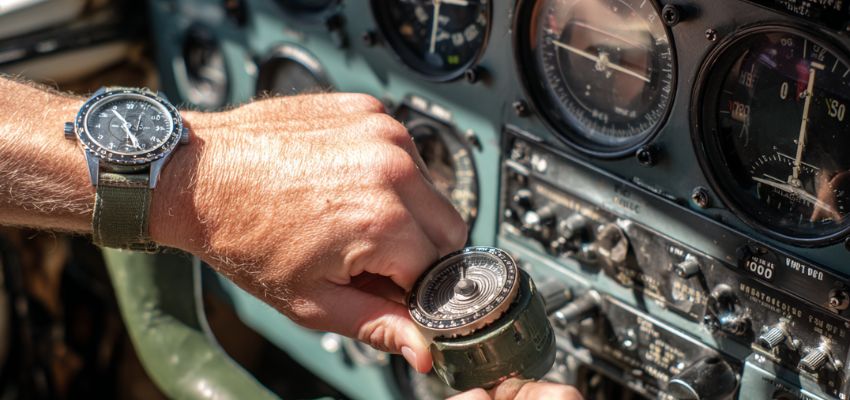
Gyroscopic Precession Aviation Instruments Unlocked
Precession is not just an aerodynamic enemy; it is also a cockpit lifesaver. Your attitude indicator and heading indicator rely on spinning gyros to stay steady. However, friction causes these gyroscopic precession aviation instruments to drift over time.
Failing to reset your directional gyro every 15 minutes can lead to dangerous navigation errors. Regularly cross-checking your magnetic compass keeps your flight path perfectly true.
The Core Left-Turning Tendencies
Gyroscopic precession does not operate in a vacuum. It acts as a force multiplier alongside three other lethal aerodynamic factors that actively drag your aircraft toward the left edge of the runway:
- Engine Torque: The clockwise engine rotation forces the left tire harder into the pavement.
- P-Factor: The downward-moving blade takes a bigger bite of air at high angles of attack.
- Spiraling Slipstream: The propeller’s corkscrew airflow physically batters the left side of your tail.
Together, these four distinct forces demand continuous active corrections from the cockpit.
Asymmetric Propeller Loading Deceptions
Many pilots confuse precession with P-factor, but their psychological profiles are entirely different. P-factor relies purely on air hitting the blades at an angle. Precession requires a physical pitch change to trigger.
Misidentifying which force is attacking your airframe can lead to poor rudder inputs and unstable climbs. Learning to separate these sensations makes you a highly adaptable pilot.
Your Right Foot is the Only Antidote
How do you maintain a perfect runway centerline against these combined forces? The solution is simple but requires absolute muscle memory, step on the right rudder. You cannot afford to be timid with your feet.
Safe flight dictates matching engine power with immediate, assertive right rudder pressure. Good pilots keep their heels on the floor and toes ready.
The Danger of Timid Power Application
Jamming the throttle forward creates an instantaneous surge in gyroscopic forces. If you are slow with your feet, the airplane will veer off the runway before you can think. Smooth, deliberate throttle advancement gives you the fraction of a second needed to apply accurate, proportional counter-pressure. Control the engine, or the engine will control the entire airplane.
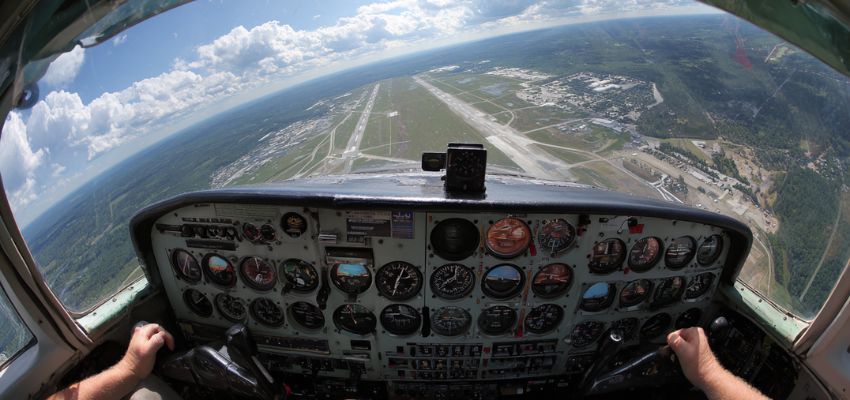
Master Your Aircraft Control Limits
Are you truly mastering your aircraft, or just letting it fly you? Yielding to gyroscopic forces destroys your precision and risks a ground loop. By understanding what gyroscopic precession aviation is throws at your airframe, you transform a chaotic scramble on the runway into a smooth, professional departure. True mastery means flying with total confidence instead of basic survival instincts.
FAQs About Gyroscopic Precession Aviation
How does gyroscopic precession affect aircraft?
When a force hits a spinning propeller, the push moves ninety degrees ahead in the circle. This makes the airplane nose turn left when the pilot lifts the tail.
What is the 70 50 rule in aviation?
This rule says a plane should reach half its takeoff speed by the time it uses most of the runway. If the plane is too slow at that point, the pilot must stop the takeoff.
Why do pilots say “heavy”?
Pilots say this word when they fly very large and heavy airplanes. It warns smaller planes nearby about the big waves of dangerous air behind the giant plane.
What planes go 500 mph?
Most big passenger jet planes fly at this very fast speed high in the sky. Large jets made by Boeing and Airbus easily travel at five hundred miles per hour.
Why avoid seat 11A on a plane?
Many airlines put this specific seat next to a solid wall instead of a window. People dislike sitting there because they cannot look outside during the flight.
Final Thoughts
Gyroscopic precession is a tricky rule of physics. It makes spinning parts react ninety degrees later than where you push them. This force changes how airplanes turn and how helicopter blades tilt in the sky.
It even affects your cockpit tools. If your flight instruments stop working correctly, do not worry. The expert team at Palm Beach Avionics can fix them fast. They are FAA-approved and have helped pilots stay safe since 1978.
They can repair your tools or build a whole new instrument panel. They make sure your plane is always ready to fly safely.
40+ Years Serving South Florida in Avionics and Aircraft Maintenance
Palm Beach Avionics has been dedicated to providing top-notch avionics and aircraft maintenance services in South Florida for over four decades. Our team of highly skilled professionals takes pride in delivering exceptional quality workmanship, ensuring the safety and reliability of every aircraft we service.
Fact Checked For Accuracy
Our team has fact-checked this article for accuracy. Read about the editorial standards we employ on our website to ensure your safety and wellbeing.

About The Author
Rei Bayucca is a private jet enthusiast and professional writer. With many years of experience, she crafts articles that educate and inform her readers.